Ukrainian Translation
I noticed a couple of Ukrainian visitors to my websites! YAY!!! How exciting! :)
Потенційний клієнт порадив мені статтю Empowering the Energy Transition Through Fast and Flexible Network Simulation. У ній ідеться про проєкт із відкритим кодом Power Grid Model DS (pgm-ds), де DS означає Data Science — науку про дані.

Проєкт pgm-ds розширює Power Grid Model. У документації сказано, що power-grid-model — це бібліотека для аналізу розподільних електромереж у стаціонарному режимі. Її модель охоплює такі компоненти:
— і багато іншого. Її застосовують для моделювання потоків потужності, оцінювання стану мережі та коротких замикань.
Power Grid Model DS розвиває цю основу й надає зрозумілий і зручний API для моделювання та симуляції поведінки мережі. Як пояснює документація, він призначений для створення застосунків із науки про дані, пов’язаних із power-grid-model, зокрема для аналізу мереж і симуляцій. Він визначає дата-клас Grid, який підтримує узгодженість усієї мережі й дозволяє розширювати структури даних Power Grid Model.
Технічні кроки були простими. Зрозуміти їхній зміст виявилося складніше.
pgm-ds справді зручний у використанні. Перетворити документацію у форматі Jupyter Notebook на сценарій для запуску демонстрації було зовсім нескладно. Значно важче було зрозуміти, що саме я бачу.
Пакет включає візуалізацію мережі через фронтенд WSGI на Flask, який легко переглянути в браузері. Графіку створено на Dash Cytoscape — елегантному й потужному рушії візуалізації графів, ідеальному для таких завдань.
Зображення було красивим, але основні дані подавалися в консолі у вигляді таблиць. Ось кілька прикладів.
| id | u_rated | node_type | feeder_branch_id | feeder_node_id | u | x_coor | y_coor |
|---|---|---|---|---|---|---|---|
| 1 | 10500.0 | 0 | 64 | 61 | 0.0 | 125.848.. | 245.522.. |
| 2 | 10500.0 | 0 | 65 | 61 | 0.0 | 385.322.. | 175.70.. |
| 61 | 10500.0 | 1 | -2147483648 | -2147483648 | 0.0 | 134.732.. | 145.515.. |
| id | from_node | to_node | from_status | to_status | feeder_branch_id | feeder_node_id | is_feeder | r1 | x1 | c1 | tan1 | i_n | i_from |
|---|---|---|---|---|---|---|---|---|---|---|---|---|---|
| 63 | 61 | 12 | 1 | 1 | 63 | 61 | True | 0.411.. | 0.023.. | 0.0 | 0.0 | 110.013.. | 0.0 |
| 74 | 20 | 8 | 1 | 1 | 63 | 61 | False | 0.585.. | 0.000.. | 0.0 | 0.0 | 227.694.. | 0.0 |
| 125 | 96 | 94 | 1 | 1 | 63 | 61 | False | 0.036.. | 0.04.. | 0.0 | 0.0 | 362.904.. | 0.0 |
| id | from_node | to_node | from_status | to_status | feeder_branch_id | feeder_node_id | is_feeder | u1 | u2 | sn | tap_size | uk | pk | i0 | p0 | winding_from | winding_to | clock | tap_side | tap_pos | tap_min | tap_max | tap_nom |
|---|---|---|---|---|---|---|---|---|---|---|---|---|---|---|---|---|---|---|---|---|---|---|---|
| 123 | 5 | 95 | 1 | 1 | 64 | 61 | False | 10500.0 | 3000.0 | 30000000.0 | 0.0 | 0.203 | 100000.0 | 0.0 | 0.0 | 0 | 0 | 12 | 0 | 0 | 0 | 0 | 0 |
| 124 | 12 | 96 | 1 | 1 | 63 | 61 | False | 10500.0 | 3000.0 | 30000000.0 | 0.0 | 0.203 | 100000.0 | 0.0 | 0.0 | 0 | 0 | 12 | 0 | 0 | 0 | 0 | 0 |
Налаштувати й запустити код було просто. А от розібратися у виводі та наслідках того, що робить програма, — ні. Мій досвід — системне адміністрування Linux і програмування на Python. Електротехніка не входить до моїх спеціалізацій.
Я почав досліджувати структури даних і функції, читати чітку й лаконічну документацію API та шукати додаткові матеріали.
Раніше я уявляв електромережу як складну, але переважно статичну електричну схему. Проте стало зрозуміло, що правильніше бачити в ній динамічну фізичну систему, де такі електричні характеристики, як реактивний опір і реактивна потужність, суттєво впливають на поведінку не завжди інтуїтивним способом. Мережа певною мірою нагадує живий організм, який дихає.
У демонстраційних даних одразу трапилося значення реактивного опору на кілометр, яке також є атрибутом ліній x1. Мабуть, саме реактивний опір було найважче осмислити. Я переглянув кілька відео на YouTube та обговорив тему з ChatGPT. Реактивна потужність — ключ до розуміння того, чому керування електромережею таке складне. Повне пояснення виходить за межі цього допису, але це важливе поняття для розуміння поведінки системи.
Я не заглиблювався в кожний атрибут, а лише хотів зрозуміти можливості пакета та отримати загальне уявлення про його зв’язок із реальним світом.
Коли я усвідомив справжню складність електромережі, масштаб завдання в моїй уяві зріс на кілька порядків. Як я вже згадував, я працював із Linux та в операційних командах таких компаній, як CIBC, Merrill Lynch, Moneris Solutions і SiGe Semiconductor. Я бачив величезні панелі з технічними показниками, за якими оператори стежать за системами. Тоді я пошукав у Google панель керування Hydro One, енергетичної компанії Онтаріо.
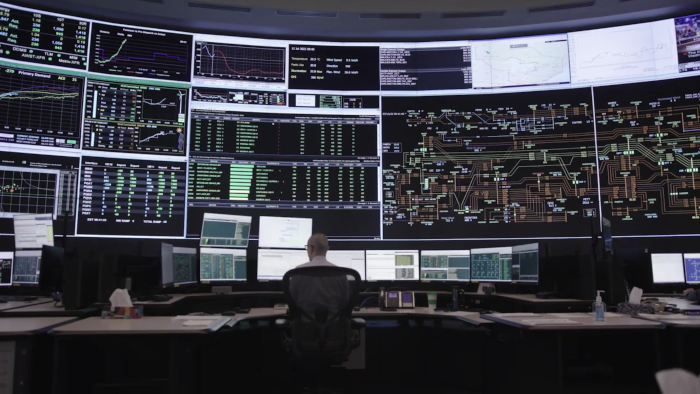
Хоч це лише невелика частина системи, вона добре ілюструє щільність даних і складність, із якою оператори стикаються на практиці.
Програма pgm-ds дозволяє динамічно змінювати модель мережі, додавати й видаляти компоненти, а потім повідомляє про несправності та аварії. Можна перенаправляти потоки електроенергії через резервні лінії й робити багато іншого. Можна моделювати зміни та намагатися прогнозувати майбутній попит і їхній вплив.
Для такої складної системи симуляція стає природною основою для машинного навчання. Інструменти на кшталт pgm-ds дозволяють генерувати структуровані сценарії для прогнозування, виявлення аномалій та підтримки ухвалення рішень.
Розширювати й підтримувати електромережу не лише складно, а й довго. Будівництво електростанції, дамби, дата-центру, заводу чи нового житлового району потребує часу.
Ця сфера не лише технічно захоплива, а й надзвичайно важлива для реального світу. Такі інструменти не просто моделюють інфраструктуру: вони допомагають визначати, як вона розвиватиметься. Тому ця робота і цікава для розуму, і справді значуща.
I noticed a couple of Ukrainian visitors to my websites! YAY!!! How exciting! :)
My little basement aquaponics setup has given me another miniature rose!!!
Some of you may have read my Git Battles post, where I talked about how I developed and a documented a Git workflow.
I recently built MyCount to track website visitors to my projects. I found that that over 40% of my visitors were from China, and that 35% of those used a Ch...
I have a future project in mind which will require a Dynamic DNS service. I created BMDynIP for that purpose. After building the service, I wanted a simple a...
I run an NFS server on my network. I use two large drives and a cron job to rsync the data to provide basic data protection. This solution will not save you ...
I’ve been tinkering with various incarnations of Patrick Loeber’s Train an AI to Play Snake tutorial for a while now. It’s my relaxing goto project that’s fu...
This project started as a cron job and a flatfile and -honestly- that would work perfectly well for a small home setup. Say, two or three machines. I’m curre...
The Bear & Moose GeoIP Project provides an easy-to-use GeoIP service for your applications and for interactive lookups.
Our first TV was a small black-and-white thing where, on rare occasions, we’d watch Animal Kingdom. Then Beta and VHS came along, and you could watch them at...
Fr3d worked: It could talk to the Snake Lab, propose changes to the RNN configuration, run experiments, look at the results, and try again. It proved the ide...
The Snake Lab had become a proper server, with a ZeroMQ API, configuration validation, a database, and a way to run experiments independently of the client. ...
In my last post, I setup a locally hosted LLM running on an old HP Z440 and wrote a crude little conversation loop. I generated random numbers, fed them to t...
This is part one of a four part blog series. In this post, I download, install and setup some software to prompt a local LLM to write haikus…
In the first post, AI FX was still mostly a seed: a repo, a PyPI package, and an idea about using automated FOREX tooling as a learning lab. Since then, the ...
A potential client pointed me to Empowering the Energy Transition Through Fast and Flexible Network Simulation. The article describes an Open Source project,...
I have a prospective client who runs a small group of technology businesses, at least one of which integrates with clients using the Delphi programming lan...
I’ve spent some time around trading systemsL At Merrill Lynch, I supported the Order Audit Trail System (OATS), a compliance system required by NASDAQ. Its p...
A Rosebud, a Few Guppies, and a Quiet Little Ecosystem
I setup an Etsy Storefront to sell high quality, museum grade prints of some of my artwork.
I’ve been working on Db4E, my Monero deployment, operations and analytics platform. It uses Linux systemd to spin up manage Monero, P2Pool and XMRig instance...
AI Snake Lab is an interactive reinforcement learning sandbox for experimenting with AI agents in a classic Snake Game environment — featuring a live Textual...
You know that saying, “A picture is worth a thousand words.”? In programming, I’d argue it can be worth a thousand lines of code…
This post is about using constants in your code. Why it matters, what the benefits are and how you can do it well. I’m sad to say, I learned this the hard wa...
This week, I introduced 15 raccoon tiger shrimp—plus a surprise 2 bonus—to my aquarium. After a proper acclimatization, I released them into the tank… and ju...
When I first started experimenting with Monero mining and self-hosted infrastructure, I did what everyone else does: I downloaded the Monero software, the P2...
Let me be honest: Git has punched me in the face more times than I can count. Every time I think I’ve got a smooth release flow down, Git yells, “Not so fast...
I was burned by opaque documentation: I’ve been building a modern terminal UI in Python using the excellent Textual framework. It’s sharp, fast, and honestly...
The original reporting system was a set of static dashboards built using GitHub Pages, JavaScript, and ApexCharts. It pulled data from my mining setup — via ...
I’ve been deep in the trenches with my Db4E project — pulling together Monero mining infrastructure, MongoDB integration, and a bunch of orchestration magic....
I recently published a small Python module to PyPI and GitHub: db4e-systemd, a lightweight wrapper around systemctl that lets you control services (start, st...
I received my order from NIKU Farms, YAY! It’s a meat delivery that my sister, Corinna Ghaznavi, gifted me this Christmas. Every two months I receive this am...
As part of my goal to be more visible in the world, I setup this domain i.e. https://osoyalce.com. I use it to publish information about the projects I’m wor...
It’s been a while since I started and then abandoned this blog. My last post was in June of 2024!!
I decided that I didn’t like the way that the main blog page looks. I am using GitHub to host the website and am using a fork of the jekyll/minima theme. My ...
It’s in the construction phase. I need to complete the water circulation process. I bought a fiber glass kit for this (and also to fix my kitchen sink!).
The XMR Mining Farm complete with this eye-popping chart The Bear and Moose Knowledge Base My resume MyZODB - A Place to Store Everything